

Best Asana & Pranayama To Boost Immunity
YOUR IMMUNITY YOGA CAPSULE
Life has changed for most of us in the past one year. We have a term new normal in our dictionary. While it is heartening to hear the vaccination has started in many parts of the world, it will take some time for life to get back to pre-corona days.
COVID-19 has been the biggest challenge faced by mankind in recent times. To maintain well-being and resume normal life post COVID-19 infection is not so easy for some. There is a general body weakness combined with stiffness of joints that stays for weeks.
Yoga, the ancient spiritual practice, is a great tool to regain well-being post the infection. Yoga does not need any equipment other than a mat and our mind.
Yoga boosts the immunity of our body. Daily Pranayama helps in strengthening the respiratory system. Meditation helps in regaining emotional equilibrium. Practices of a few asanas will help in regaining the strength and fitness levels of our body. A strong immune system can protect you from COVID-19 and other illnesses. There is no better way to boost your immunity than with yoga.
In today’s blog we speak of a few asanas to help your body restore. These asanas open the chest and increase the supply of oxygen to the lungs. Take time out to do these simple asanas to calm your mind and relax your body.
01
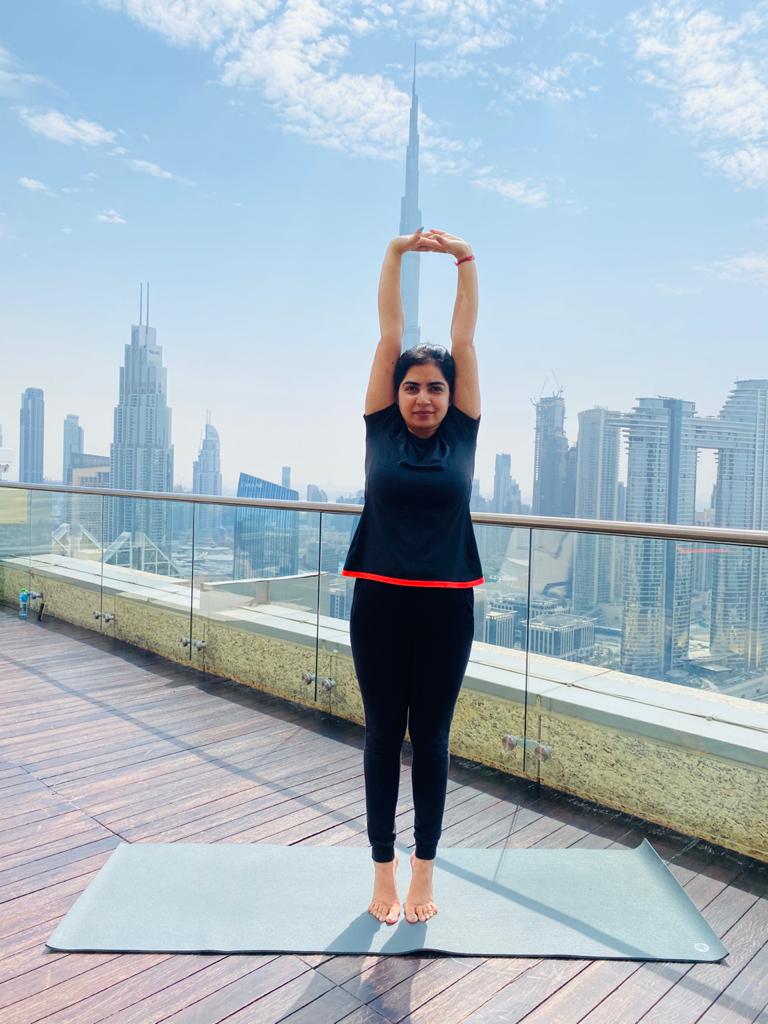
Tadasana (Palm Tree Pose): In Sanskrit; tada, meaning “mountain” and asana meaning “seat” or “posture.”
- Stand with feet slightly apart and ensure weight is balanced equally on both feet.
- Inhale, lift your arms above your head. Interlock your fingers with palms facing upwards.
- Your biceps should touch your ears gently.
- Roll your shoulders back and lift your spine. This will open your chest cavity, allowing more air to fill your lungs.
- Relax your facial muscles. Stay for 30 seconds in the asana and return to normal posture.
Benefits of Tadasana:
“Samasehitih” is the Sanskrit name for this pose which means a balanced state. You will achieve a balance between your body and consciousness in this pose.
- Tadasana helps in correcting your posture while strengthening your spine. It opens the chest muscles, promoting more oxygen to the lungs.
- This asana increases the flexibility of your ankles, thighs and joints. It tones the hips and abdomen muscles.
- Tadasana strengthens your nervous system and regulates your respiratory and digestive functions.

02
Tiryaka Tadasana (Swaying Palm Tree Pose). In Sanskrit ‘Triyaka’ means swaying. This asana is a variation of Tadasana that includes a side stretch.
- Stand with your feet apart at shoulder width. Inhale, lift your arms over your head.
- Interlock the fingers of both your hands with palms facing upwards.
- Stretch the arms upwards so that the biceps are touching your ears.
- While exhaling slowly bend to the right side of the body as much as your body allows.
- Keep the elbow and arm straight. You should feel a sweet stretch on the left side of the waist. Be in this position for a few seconds. Return to the center before repeating on the other side.
Benefits of Tiryaka Tadasana:
- This asana expands the chest and improves the breathing.
- This asana stretches the sides. Bending to the left, tones the liver which is on the right side of the body.
- It helps in fat reduction around the waist and tones the organs in the abdomen. This aids in digestion and proper bowel movement.
- It helps in strengthening of legs and creates a sense of balance.

03
Ardh Matsyendrasana (Half Spinal Twist). In Sanskrit, ardha means “half”; matsya means “fish”; indra means “king”; and asana means “pose.”
- Sit up straight and stretch the legs in front of you. Keep the feet together. Ensure the spine is straight.
- Bend the left leg. Place the heel of left foot close to the right thigh.
- Cross the right leg over the left knee.
- Keep the right hand behind you. Left hand on the right knee.
- Twist the waist, shoulders and neck to the right and look over the right shoulder. Hold the asana and take deep long breaths.
- To come out of the asana, breathe out, release the right hand first, release the waist, chest and neck.
- Sit up and repeat on the other side.
Benefits of Ardh Matsyendrasana:
- Opens the chest and increases the oxygen supply to the lungs.
- It opens the shoulder, hips and neck muscles. This asana tones the obliques and abdomen muscles.
- This asana stretches the spine and is helpful in increasing the flexibility of the spine.
- This asana aids in digestion. The deep twist massages the abdominal organs, thus enabling digestion.

04
Paschimottanasana (Intense Stretch Pose). In Sanskrit “Paschima” means “west,” which refers to the “back side of the body,” and “Uttana” means “intense stretch or extended,” and asana means “pose.”
- Sit up straight with legs stretched out straight in front of you. Keep the spine erect. The toes should be flexed towards you.
- Inhale deeply, widen your chest and raise both arms above your head. Stretch your hands to your maximum capacity.
- Exhaling out, lean forward from the hip joints, moving towards the toes. The movement should happen from the spine.
- Move forward till you place your hands on the legs, wherever they reach without any force. If you can, reach for your toes to pull your body forward.
- Hold the heels, ankles or any part of the leg that can be reached comfortably. You can use a strap to loop it around your foot soles to help you.
- Without bending your legs, further lengthen the front torso. Try to bring the lower stomach to touch the legs, then the upper belly, followed by ribs and lastly the head.
- Be in the asana for at least 15 seconds before you release the pose.
Benefits of Paschimottanasana:
- This asana stretches the back muscles from head to toes.
- It massages and tones the abdomen and pelvic organs.
- Activates the meridian for kidney, health and lungs.
- Tones the shoulders.
- Activates the solar plexus chakra.

05
Ustrasana (Camel Pose). The name is derived from the Sanskrit ustra, meaning “camel,” and asana, meaning “pose.”
- Kneel on the yoga mat. Your knees should be in line with the shoulder. The soles of your feet should face the ceiling. Place your hands on the hips.
- Inhale as you engage your lower belly and draw in your tail bone.
- Next lift your sternum and allow the rib cage to expand.
- Slowly arch your back and drop your hands towards your feet till your arms are straight.
- Keep your neck in neutral position. Do not strain the neck.
- Stay in this posture for a couple of breaths.
- To come out of the posture, bring your chin down to your chest. Engage your lower belly, using your hands to support your lower back and come up slowly.
Benefits of Ustrasana:
- This asana opens up the chest area, aiding in better respiration and functioning of lungs.
- Regular practice of this asana opens up the hips, stretching the hip flexors.
- Stretches and opens the front of the body. It also strengthens the back and shoulders.
- Relieves the body of lower back ache. Spine flexibility improves by regular practice of this asana and improves the body posture.
- Stretches the abdominal muscles, hence helping digestion.

06
Malasana (Garland Pose)
- Spread your feet shoulder width apart.
- Bend your knees and lower your back to the floor to reach the squat position.
- Keep your spine straight.
- Take your arms inside the knees and bend your elbows to bring your hands in the namaste mudra.
- Allow your thumbs to touch the chest to keep the chest upright.
Benefits of Malasana:
- This asana strengthens calves and ankles, feet and toes.
- It also tones your abdominals, thus aiding in digestion.
- This asana mobilizes the pelvic and hip joints. It helps relax the muscles of the lower back.
- Ideal for prenatal yoga.

07
Pawan Muktha Asana (Wind Releasing Pose). This word is from the Sanskrit language. Pavana, meaning “wind”; mukta, meaning “to release”; and asana, meaning “pose.”
- Lie on your back with feet together and arms beside your body.
- Breathe in and as you exhale bring both your feet towards your chest.
- Hug your legs to your body with both your hands wrapped around the shins.
- Lift your head and chest off the floor and try to touch your chin to your knees.
- You can practice this asana in three segments. First with the left knee, then with the right knee. After that with both the knees.
Benefits of Pawan Muktha Asana:
- Strengthens the lower back muscles, thus improving spinal health.
- Stretches the neck and back muscles.
- Aids in digestion by massaging the intestines and other organs in the abdomen.
- The pressure on the abdomen releases trapped gases in the large intestine.